Thursday, December 18, 2025

Inbox Astronomy: NASA's Hubble Sees Asteroids Colliding at Nearby Star for First Time

INBOX ASTRONOMY

NASA's Hubble Sees Asteroids Colliding at Nearby Star for First Time

Release date: Thursday, December 18, 2025 2:00:00 PM Eastern Standard Time
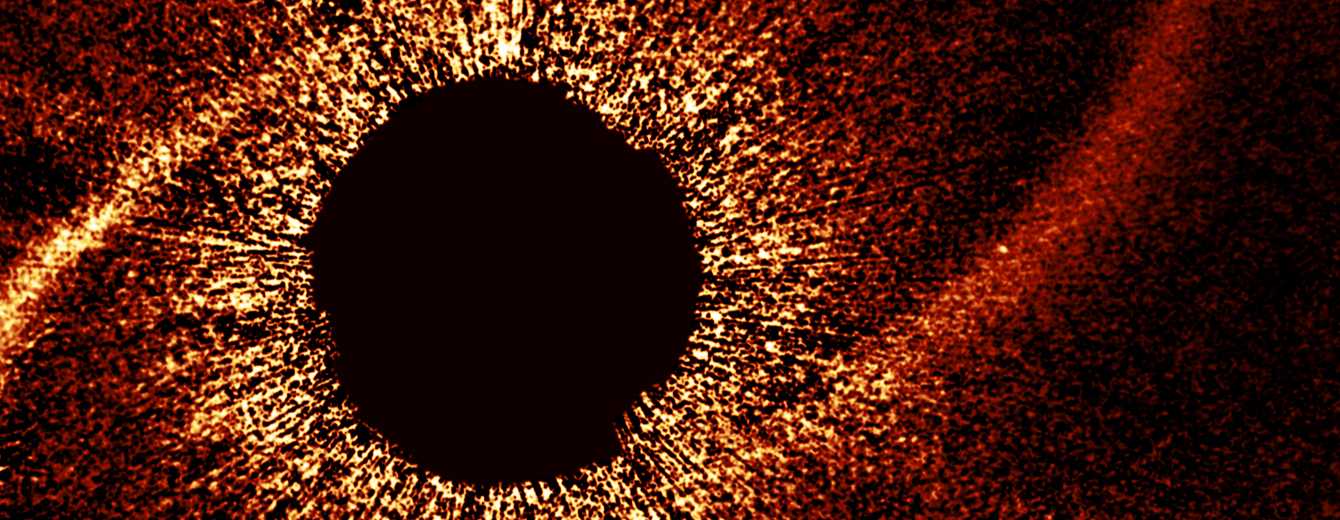
NASA's Hubble Sees Asteroids Colliding at Nearby Star for First Time


The spectacular, resulting dust cloud mimics the appearance of a planet.

First you don’t see it, now you do! While Hubble astronomers were repeatedly viewing the nearby star Fomalhaut and its planetary system, they suddenly saw a point of light appear out of nowhere. This object did not show up in any of their previous observations. The scientists quickly realized that Hubble had captured the violent collision of two massive objects, an extraordinary event unlike anything in our own present-day solar system. The huge debris cloud created by this impact looked like a newly found exoplanet.


Find additional resources at www.stsci.edu


  Please do not reply to this message.
You are receiving this email because you are subscribed to the Inbox Astronomy mailing list.
 
Produced by the Space Telescope Science Institute's Office of Public Outreach
 

Tuesday, December 16, 2025

Inbox Astronomy: NASA=?UTF-8?Q?=E2=80=99s_?=Webb Observes Exoplanet Whose Composition Defies Explanation

INBOX ASTRONOMY

NASA’s Webb Observes Exoplanet Whose Composition Defies Explanation

Release date: Tuesday, December 16, 2025 10:00:00 AM Eastern Standard Time

NASA’s Webb Observes Exoplanet Whose Composition Defies Explanation


Bizarre, lemon-shaped world has an atmosphere unlike any ever seen before.

In a finding scientists call “an absolute surprise,” a team using NASA’s James Webb Space Telescope has uncovered a rare type of exoplanet whose atmospheric composition challenges current theories of how the planet could have formed. This Jupiter-mass body appears to have an exotic helium-and-carbon-dominated atmosphere unlike any ever seen before.

This exoplanet is orbiting a pulsar, a rapidly spinning neutron star that is the mass of the Sun but the size of a city. The pulsar emits beams of electromagnetic radiation from its magnetic poles at regular intervals of just milliseconds. Together, the star and exoplanet may be considered a “black widow” system, though not a typical example. Black widow systems are a rare type of double system where a pulsar is paired with a small, low-mass stellar companion. Like the spider for which it is named, the pulsar slowly consumes its unfortunate partner. But in this unique case, the companion is an exoplanet, not a star. 


Find additional resources at www.stsci.edu


  Please do not reply to this message.
You are receiving this email because you are subscribed to the Inbox Astronomy mailing list.
 
Produced by the Space Telescope Science Institute's Office of Public Outreach
 

Monday, December 15, 2025

Inbox Astronomy: NASA's Roman Telescope Will Observe Thousands of Newfound Cosmic Voids

INBOX ASTRONOMY

NASA's Roman Telescope Will Observe Thousands of Newfound Cosmic Voids

Release date: Monday, December 15, 2025 10:00:00 AM Eastern Standard Time

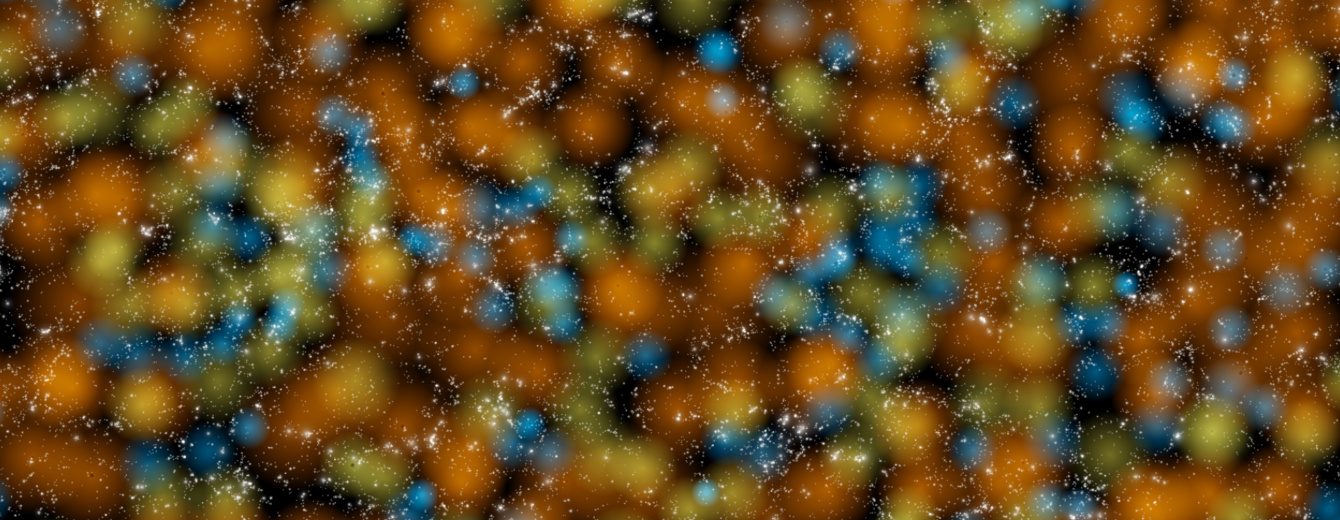
NASA's Roman Telescope Will Observe Thousands of Newfound Cosmic Voids


The resulting “big data” will help illuminate the nature of dark energy.

What do fizzing champagne glasses and our universe have in common? They’re both full of bubbles! The cosmic bubbles are vast structures hundreds of millions of light-years across. Their walls are outlined by collections of galaxies. The details of these bubbles – their size, shape, and distribution – can tell us more about the mysterious force known as dark energy that is causing the universe’s expansion to accelerate. The upcoming Nancy Grace Roman Space Telescope will detect and measure tens of thousands of cosmic voids, some as small as just 20 million light-years across.

Lee esta historia en español.


Find additional resources at www.stsci.edu


  Please do not reply to this message.
You are receiving this email because you are subscribed to the Inbox Astronomy mailing list.
 
Produced by the Space Telescope Science Institute's Office of Public Outreach
 

Thursday, December 11, 2025

Inbox Astronomy: NASA=?UTF-8?Q?=E2=80=99s_Webb_Detects_Thick_Atmosphere_Around_Broiling_Lav?= a World 

INBOX ASTRONOMY

NASA’s Webb Detects Thick Atmosphere Around Broiling Lava World 

Release date: Thursday, December 11, 2025 10:00:00 AM Eastern Standard Time

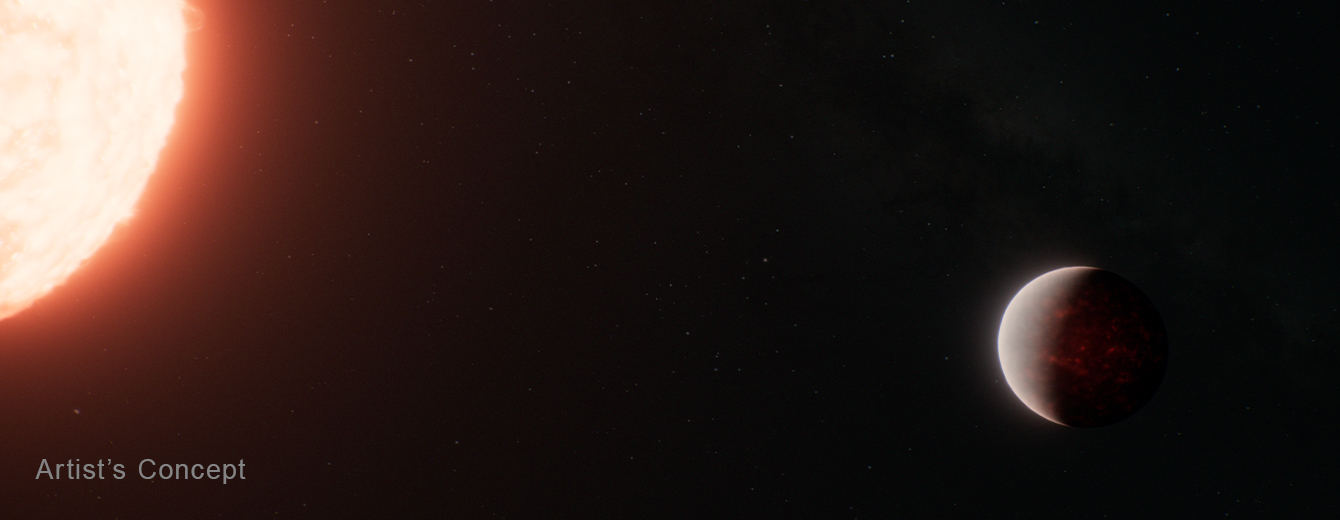
NASA’s Webb Detects Thick Atmosphere Around Broiling Lava World 


Observations of the ultra-hot super-Earth exoplanet TOI-561 b show the strongest evidence yet for an atmosphere on a rocky planet outside our solar system.

Imagine a rocky world that has spent billions of years in the blazing light of a star so close it spans a quarter of the planet’s sky. A world where a year lasts 11 hours, but the day never ends. A world whose dayside temperature is so high that the surface must now be a sea of liquid hot magma. Conventional wisdom might suggest that a planet like this is far too small and hot to hold on to an atmosphere. 

But new results from NASA’s James Webb Space Telescope indicate otherwise. 

The molten surface of exoplanet TOI-561 b, an ancient, ultra-hot super-Earth 280 light-years away, seems to be covered in a thick blanket of gas that makes the planet look much, much cooler than it should be. And once again, Webb observations are generating more questions than they are answering.


Find additional resources at www.stsci.edu


  Please do not reply to this message.
You are receiving this email because you are subscribed to the Inbox Astronomy mailing list.
 
Produced by the Space Telescope Science Institute's Office of Public Outreach
 

Tuesday, December 9, 2025

Inbox Astronomy: NASA=?UTF-8?Q?=E2=80=99s_?=Webb Identifies Earliest Supernova to Date, Shows Host Galaxy

INBOX ASTRONOMY

NASA’s Webb Identifies Earliest Supernova to Date, Shows Host Galaxy

Release date: Tuesday, December 9, 2025 11:00:00 AM Eastern Standard Time

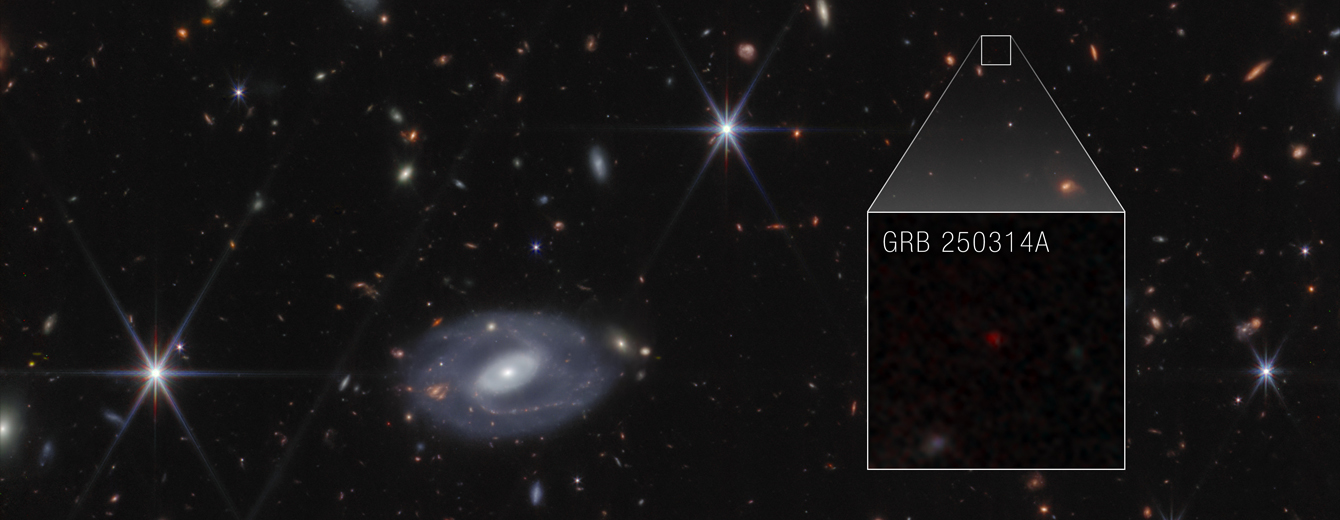
NASA’s Webb Identifies Earliest Supernova to Date, Shows Host Galaxy


The telescope captured near-infrared light from one of the earliest stars seen to explode in the history of the universe.

With a few near-infrared snapshots, the James Webb Space Telescope nailed down the source of a super bright flash of light known as a gamma-ray burst, generated when a massive star exploded when the universe was only 730 million years old.

And, for the first time at this point in the history of the universe, the telescope provided a detection of the resulting supernova’s host galaxy.

Webb’s quick-turn observations verified data taken by telescopes around the world that were following the gamma-ray burst that turned up in mid-March.


Find additional resources at www.stsci.edu


  Please do not reply to this message.
You are receiving this email because you are subscribed to the Inbox Astronomy mailing list.
 
Produced by the Space Telescope Science Institute's Office of Public Outreach
 

Thursday, November 20, 2025

Inbox Astronomy: NASA's Roman Could Bring New Waves of Information on Galaxy=?UTF-8?Q?=E2=80=99s_?=Stars

INBOX ASTRONOMY

NASA's Roman Could Bring New Waves of Information on Galaxy’s Stars

Release date: Thursday, November 20, 2025 10:00:00 AM Eastern Standard Time

NASA's Roman Could Bring New Waves of Information on Galaxy’s Stars


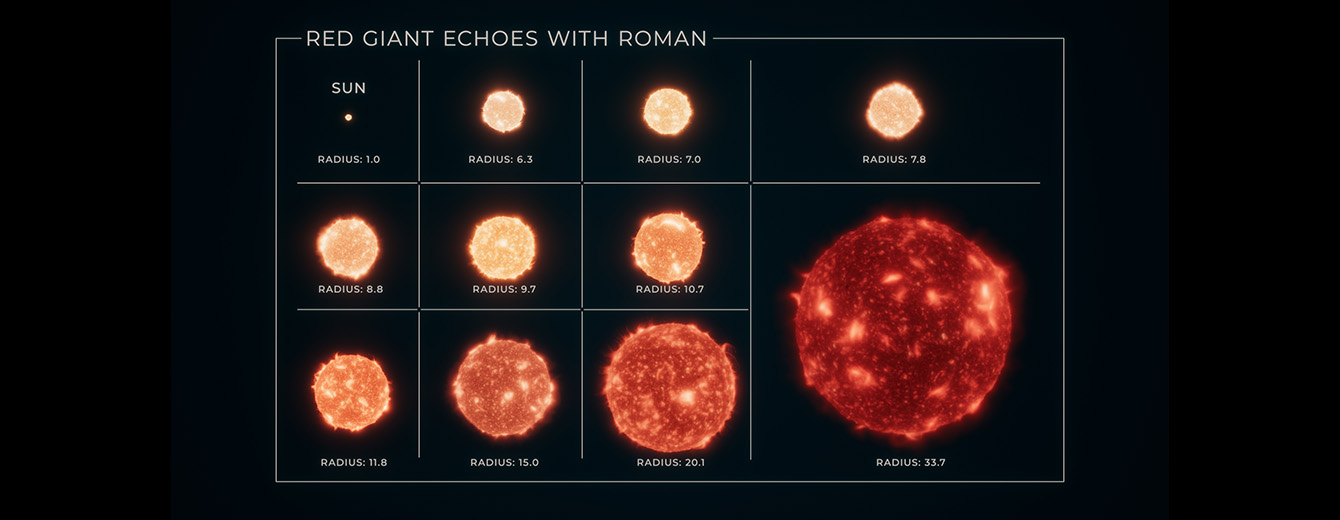
It’s clear as a bell: Roman can enlighten us on the stars located in the Milky Way’s galactic bulge.

In musical terms, stars are like a constantly playing handbell choir. The turbulence within their interiors creates a pattern of waves — steady oscillations, like a ringing bell — which cause changes in their overall brightness. Studying these fluctuations, a method known as asteroseismology, can provide details about the stars themselves, such as their age, mass, and size.

Building from NASA’s now-retired Kepler space telescope’s successful asteroseismic detections, a team of researchers has recently confirmed that asteroseismology will be possible with NASA’s upcoming Nancy Grace Roman Space Telescope. Their study also explores different models to provide an estimation of the number of stars that will be detectable via this method. Their results indicate the telescope will provide the largest asteroseismic sample ever collected.

Lee esta historia en español.


Find additional resources at www.stsci.edu


  Please do not reply to this message.
You are receiving this email because you are subscribed to the Inbox Astronomy mailing list.
 
Produced by the Space Telescope Science Institute's Office of Public Outreach
 

Wednesday, November 19, 2025

Inbox Astronomy: Webb First to Show 4 Dust Shells 'Spiraling' Apep, Limits Long Orbit

INBOX ASTRONOMY

Webb First to Show 4 Dust Shells 'Spiraling' Apep, Limits Long Orbit

Release date: Wednesday, November 19, 2025 11:00:00 AM Eastern Standard Time

Webb First to Show 4 Dust Shells 'Spiraling' Apep, Limits Long Orbit


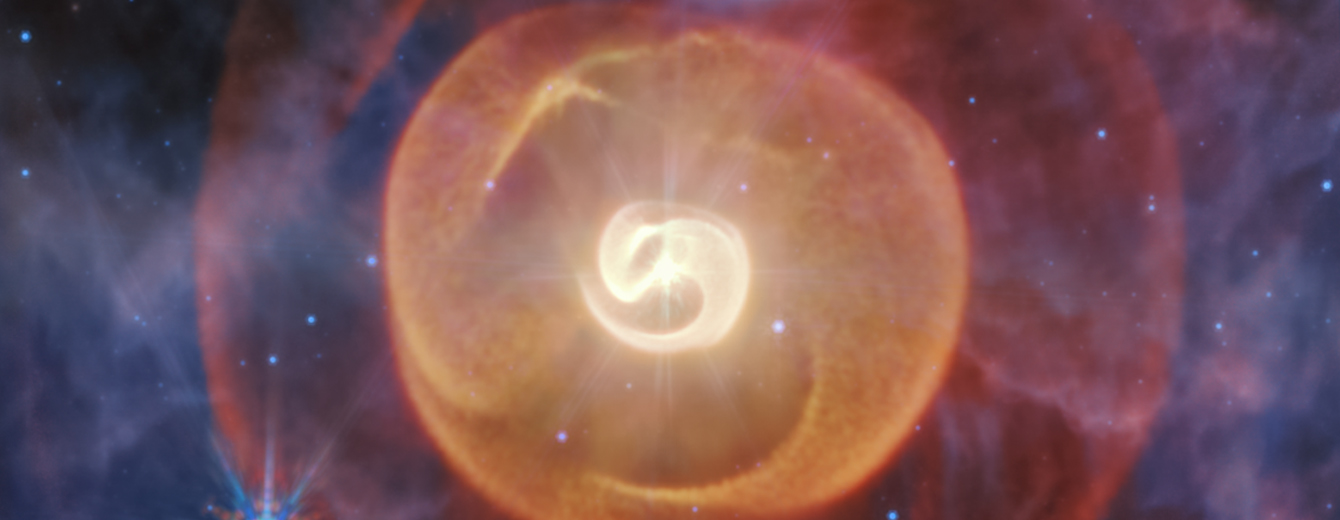
Researchers used Webb to refine the orbit of two Wolf-Rayet stars, named for the Egyptian god of chaos, to a lengthy 190 years and confirmed a third star carves their ongoing carbon dust ejections.

Coiled shells sent out by two stars known as Apep, after the Egyptian god of chaos, have come into clear view: NASA’s James Webb Space Telescope has shown spirals of dust that trace 700 years of activity.

“Webb has observed similar systems, but this shows by far the most detail,” said Yinuo Han, a lead author on a new paper and postdoctoral researcher at Caltech in Pasadena, California. “It's rare enough to see one Wolf-Rayet star, but in Apep there are two. When their stellar winds collide, they produce large amounts of carbonaceous dust over 25 years during each orbit.”

By combining these new mid-infrared observations with a series of images from the European Southern Observatory’s Very Large Telescope (VLT), Han and his collaborators narrowed down how often the stars sail past one another — once every 190 years — and confirmed that a third star, a massive supergiant, is “slicing” holes into the dusty shells.


Find additional resources at www.stsci.edu


  Please do not reply to this message.
You are receiving this email because you are subscribed to the Inbox Astronomy mailing list.
 
Produced by the Space Telescope Science Institute's Office of Public Outreach
 

Wednesday, November 12, 2025

Inbox Astronomy: Researchers Submit Record Number of Ambitious Proposals for Webb's Fifth Year of Science

INBOX ASTRONOMY

Researchers Submit Record Number of Ambitious Proposals for Webb's Fifth Year of Science

Release date: Wednesday, November 12, 2025 10:00:00 AM Eastern Standard Time

Researchers Submit Record Number of Ambitious Proposals for Webb's Fifth Year of Science


Distant galaxies, stars and stellar populations are among most popular science categories.

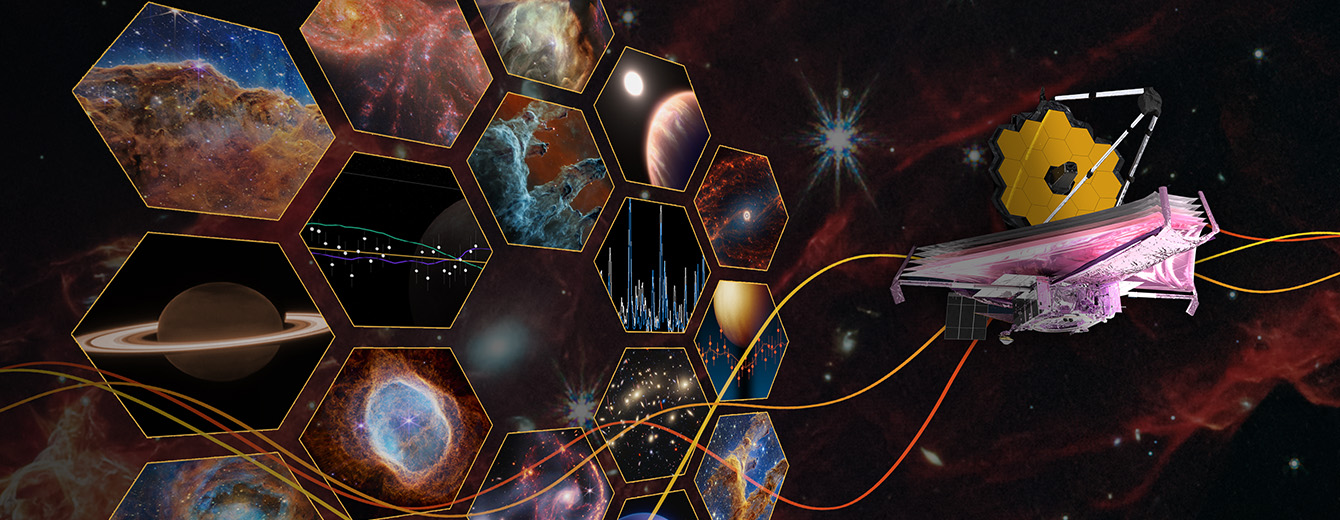
As the Science Operations Center for NASA’s James Webb Space Telescope, the Space Telescope Science Institute is responsible for a multitude of activities to maximize the scientific output of the telescope. This includes coordinating the yearly call for proposals from astronomers worldwide who hope to use precious time on the telescope to carry out their scientific program of interest.

For Webb’s fifth cycle, which begins in July 2026, STScI received a record-breaking number of proposals spanning across nearly all areas of astrophysics. There’s more behind the number, though. The types of requests show astronomers are ready to answer even bolder scientific questions with the world’s premier space observatory.


Find additional resources at www.stsci.edu


  Please do not reply to this message.
You are receiving this email because you are subscribed to the Inbox Astronomy mailing list.
 
Produced by the Space Telescope Science Institute's Office of Public Outreach
 

Thursday, November 6, 2025

Inbox Astronomy: 'Coast' Through the Cosmos with Webb at Dulles International Airport

INBOX ASTRONOMY

'Coast' Through the Cosmos with Webb at Dulles International Airport

Release date: Thursday, November 6, 2025 10:00:00 AM Eastern Standard Time

'Coast' Through the Cosmos with Webb at Dulles International Airport


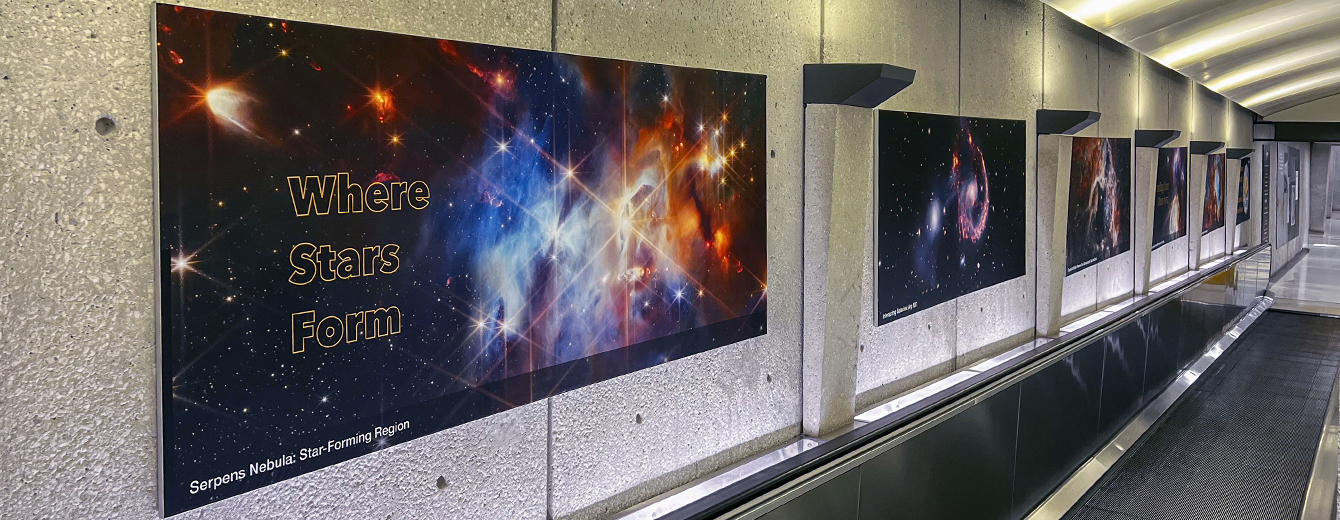
Whether you are flying to another city or arriving home, a can’t-miss exhibit near Washington, D.C., will put you in a state of awe — and inspire you to learn more about the universe.

Want to unwind while you are traveling to or from Dulles International Airport in Virginia? Prepare to be transported, both literally and figuratively, as you walk down the hall that connects the Metro stop and Parking Garage 1 to the main terminal, where almost 40 large-scale images from the James Webb Space Telescope are now on display. The telescope’s vivid infrared light images show expansive scenes of our universe, from galaxies and star-forming regions to dying stars and distant planets.

In the same hall, you will also find over 30 equally immersive images from the Hubble Space Telescope — and yes, we recommend taking in both. These exhibits, developed by the Office of Public Outreach at the Space Telescope Science Institute in Baltimore, Maryland, show the breadth and depth of Webb’s scientific discoveries since its full science operations began in July 2022. The long-term exhibits will be up until at least the end of this decade, so make a mental note to "walk through space" when you’re on site.


Find additional resources at www.stsci.edu


  Please do not reply to this message.
You are receiving this email because you are subscribed to the Inbox Astronomy mailing list.
 
Produced by the Space Telescope Science Institute's Office of Public Outreach
 

Wednesday, October 22, 2025

Inbox Astronomy: Aging White Dwarf Still Consuming Its Planetary System

INBOX ASTRONOMY

Aging White Dwarf Still Consuming Its Planetary System

Release date: Wednesday, October 22, 2025 10:00:00 AM Eastern Daylight Time

Aging White Dwarf Still Consuming Its Planetary System


Dead star seen ripping planet apart.

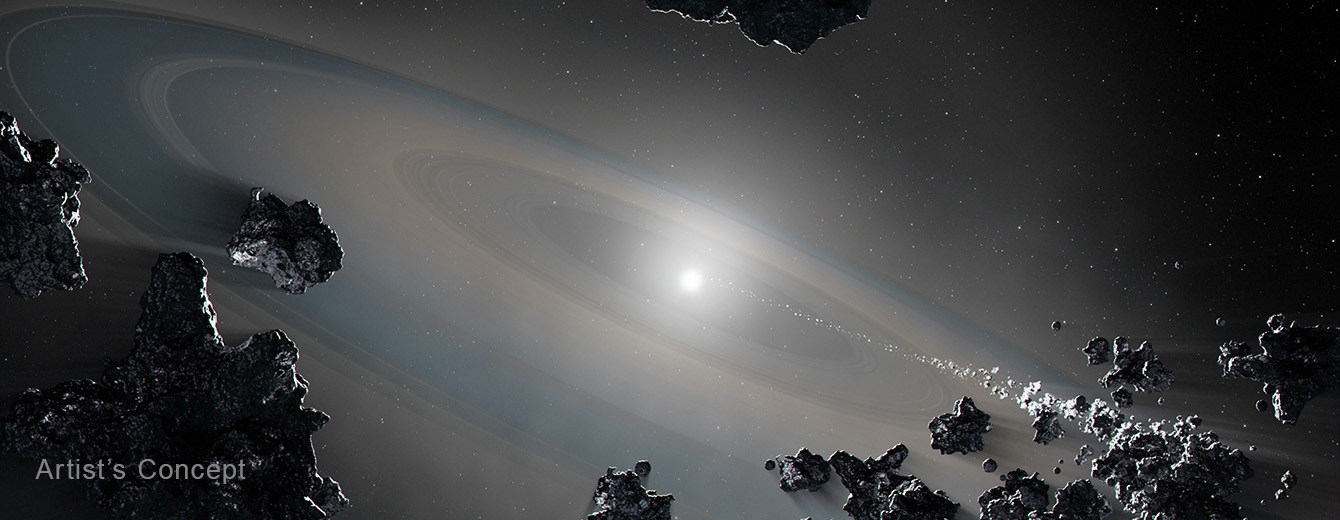
In approximately 5 billion years, the Sun will deplete its hydrogen fuel and collapse under its own gravity, becoming a white dwarf. Though Earth-sized, this dense remnant will retain much of the Sun’s gravitational influence.

This transformation marks the end of our solar system as we know it. Or does it?

The universe is never idle. Everything is in a perpetual state of fluctuation. Still, it came as a surprise to astronomers to find a 3 billion-year-old white dwarf actively accreting material from its former planetary system – a discovery that challenges assumptions about the late stages of stellar remnant evolution.

The telltale forensic evidence came from observations with the W. M. Keck Observatory on Maunakea in HawaiĘ»i. Spectroscopic analysis of light from the dwarf found 13 chemical elements that must have come from a small rocky body – an asteroid or dwarf planet.

Like an apple falling out of a tree, some unknown gravitational disturbance within the past few million years may have sent this object spiraling inward. It was then torn apart by tidal forces and absorbed into the white dwarf’s surrounding debris disk.


Find additional resources at www.stsci.edu


  Please do not reply to this message.
You are receiving this email because you are subscribed to the Inbox Astronomy mailing list.
 
Produced by the Space Telescope Science Institute's Office of Public Outreach